
By Ray Baker
Only 16% of Americans aged 50 and older say they have ever used a dating site or app, according to a national survey. If you are over 60 and thinking about giving online dating a try, you are not alone in feeling cautious, and our online dating safety tips for seniors can help.
The right online dating safety tips for seniors can help you keep your money, identity and peace of mind intact while you meet new people. The good news is that careful habits work, and they do not require you to become suspicious of everyone.
What are the best online dating safety tips for seniors?
Start with the basics: keep early chats on the platform, never send money or gift cards to someone you have not met in person, and use a separate email address. Verify what you can, meet first in a public place, and tell a friend where you are going. Trust slow, small disclosures over fast intimacy.
Key takeaways
- Keep early conversations on the dating platform and move to a phone call or video only when you feel ready.
- Never send money, gift cards or account details to someone you have not met in person.
- Pause before sharing your home address, daily routine or financial information.
- Use a separate email address and a strong password, and report suspicious profiles quickly.
- Meet first in a public place and tell a friend or family member your plans.
If you want to meet other older singles, Dating for Seniors is a site built for that.
Visit Dating for Seniors
Why are older daters a target?
Scammers follow money, and many older adults hold savings, own their home or collect a pension. That makes a retired person a more attractive target than a student with an empty bank account. Pew Research Center’s 2023 analysis found that 30% of U.S. adults have ever used a dating site or app, while 9% had used one in the past year.
The same industry has grown into a multibillion-dollar business, and that scale attracts full-time criminal operations. Scamwatch warns that scammers are often very organised and use psychological techniques to manipulate their targets. A newly single older person may be handling grief, loneliness and an unfamiliar app at the same time, which can make the first few weeks feel overwhelming.
A lifetime of being polite can also work against you. Many seniors were raised to answer questions and avoid being rude, so a pushy stranger can keep the conversation moving before you realise what is happening.
What are 5 easy safety checks?
Before you invest time in a new match, run through five simple checks. They take a few minutes and can save you months of stress.
For a broader setup guide, this article on making sure you stay safe when dating online walks you through the basics and complements our online dating safety tips for seniors. A quick check is not distrust; it is due diligence.
- Search the person’s first name, job and town in a separate browser. A genuine profile usually has a small digital footprint; no trace at all is worth a second look.
- Ask for a short video call early. Live video is harder to fake than a still photo or a rehearsed script.
- Read the profile for specific detail. Vague answers and instant declarations of love are warning signs, not personality quirks.
- Ask a question that needs local knowledge, such as the name of a suburb or a popular cafe. A scammer often gives a generic answer.
- Find the report and block buttons before you need them. Acting quickly limits the damage and helps protect other people.
When should I move off the platform?
Stay on the dating platform’s messaging system until you have had at least one video call and several consistent conversations. Most dating platforms build chat tools so you do not have to hand over your phone number straight away.
Moving to ordinary texting is not automatically dangerous, but it does remove some of the platform’s safety tools. Scamwatch says scammers rely on you not spotting warning signs because you are in a hurry or because the story seems to come from someone you trust.
If a match pushes you to switch apps within the first few messages, treat that pressure as a warning sign. I usually suggest waiting for a pattern, not a promise. Two or three video calls at different times show more than one charming evening.
What should I keep private early on?
Your home address, date of birth, daily routine and financial details do not belong in an early profile or first chat. Scamwatch’s core warning is simple: scammers want your money, financial details or personal information.
A profile that asks for bank logins, superannuation details, gift card numbers or email passwords is not romance, it is fraud. Share in warm but small layers. You can be interesting without telling a stranger which street you live on, where you bank or when your house is empty.
Think about what a stranger can learn from your answers. Your mother’s maiden name, first pet or primary school are common security questions, so keep those out of small talk.
When you are ready to look at profiles from other seniors, Dating for Seniors is one place to start.
See Dating for SeniorsHow do I plan a safe first meeting?
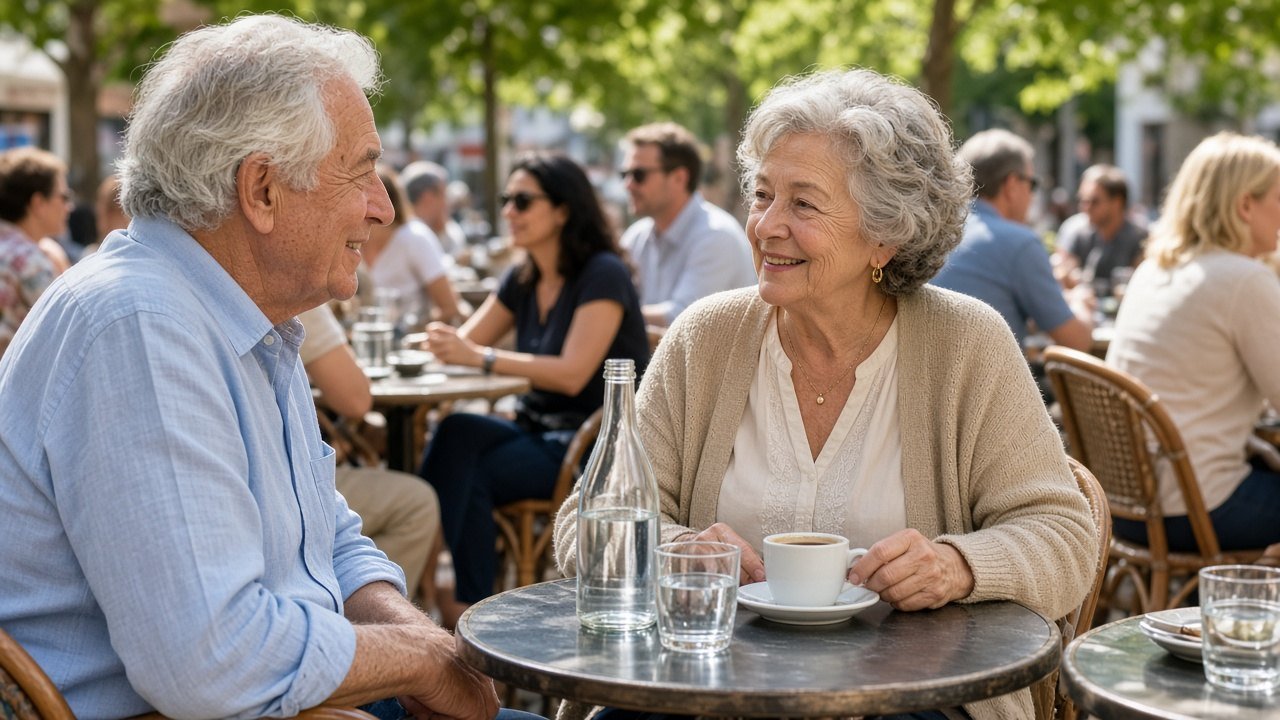
Choose a public place with plenty of people, such as a busy cafe or a well-lit restaurant, and meet there. Do not accept a lift from the person and do not let them pick you up at home. Tell a friend or family member the person’s name, where you are going and when you expect to finish, then keep your phone charged and location services on.
Have your own transport or know the bus route, and set a finish time. It is much easier to leave after one hour if you have already said you need to go. If the person says they are travelling and wants to meet later at a private address, decline.
For more on the warning signs to spot before a date, see this guide to dating safety tips and red flags, which pairs well with our online dating safety tips for seniors. A safe first date is boring on purpose: public, daytime and short enough to leave easily if you feel uncomfortable.
What if something feels wrong?
Trust that feeling. You do not need proof beyond a reasonable doubt to end a conversation. Scamwatch advises people to stop and check before acting when a story feels rushed or too good to be true.
If someone asks for money, dodges video calls, or gives inconsistent details about their job or location, step back. It is also common for scammers to return for a second attempt.
Scamwatch reports that 1 in 3 scam victims have been scammed more than once. Cutting contact early is not rude; it is self-protection. The right person will respect a boundary; a scammer will try to rush past it.
How do I handle a request for money?
Refuse once, clearly, and then stop contact. A genuine romantic partner does not ask a near-stranger for money, whatever the story is, medical bills, travel fares, a failed business deal. Scamwatch warns that scammers use believable stories to convince you to give them money or financial details.
If someone says they need help with an emergency, offer sympathy but nothing else. Do not argue or negotiate. The safest reply is a short no, followed by blocking and reporting the profile.
If a senior dating site might help, you can take a look at Dating for Seniors here.
Join Dating for SeniorsFrequently asked questions
What is the biggest red flag for seniors?
Any early request for money, gift cards or financial details is the clearest red flag. Scamwatch says scammers create believable stories to get money or personal information, so stop and check before acting. If a match asks, end contact.
Should I use my real name and town?
Using your real first name builds trust, but keep your full address offline. Your suburb is enough for small talk. Never share your street, workplace routine or financial details until you have met safely in person several times.
How soon is too soon to move to texting?
There is no fixed day, but wait for a video call and several consistent conversations. Moving quickly to another app removes some platform safety tools. If someone pushes to leave the platform in the first few messages, treat that pressure as a warning sign.
What if I have already sent money?
Contact your bank or card provider immediately and ask them to stop any transactions. Change passwords on your email, banking and shopping accounts. Then report the scam to Scamwatch so they can warn others.
Do seniors actually meet partners online?
Yes. A 2019 Pew Research Center survey found 12% of U.S. adults had been in a committed relationship with or married someone they met through a dating site or app. Success takes time and careful screening.
Honest take
My honest take is that most online dating safety tips for seniors come down to one habit: slow down. Scam pressure feeds on speed and secrecy.
If a match tries to rush you, asks for money or insists on absolute privacy, that is enough reason to walk away. You do not owe anyone a fast yes.
References
- Pew Research Center. 10 facts about Americans and online dating. 2020. https://www.pewresearch.org/short-reads/2020/02/06/10-facts-about-americans-and-online-dating/
- Pew Research Center. Key findings about online dating in the U.S. 2023. https://www.pewresearch.org/short-reads/2023/02/02/key-findings-about-online-dating-in-the-u-s/
- Scamwatch. Help to spot and avoid scams. https://www.scamwatch.gov.au/stop-check-protect/help-to-spot-and-avoid-scams
Have fun,
Ray.
This post contains affiliate links; I may earn a commission at no cost to you.